Short Fiction

The Halloween Man

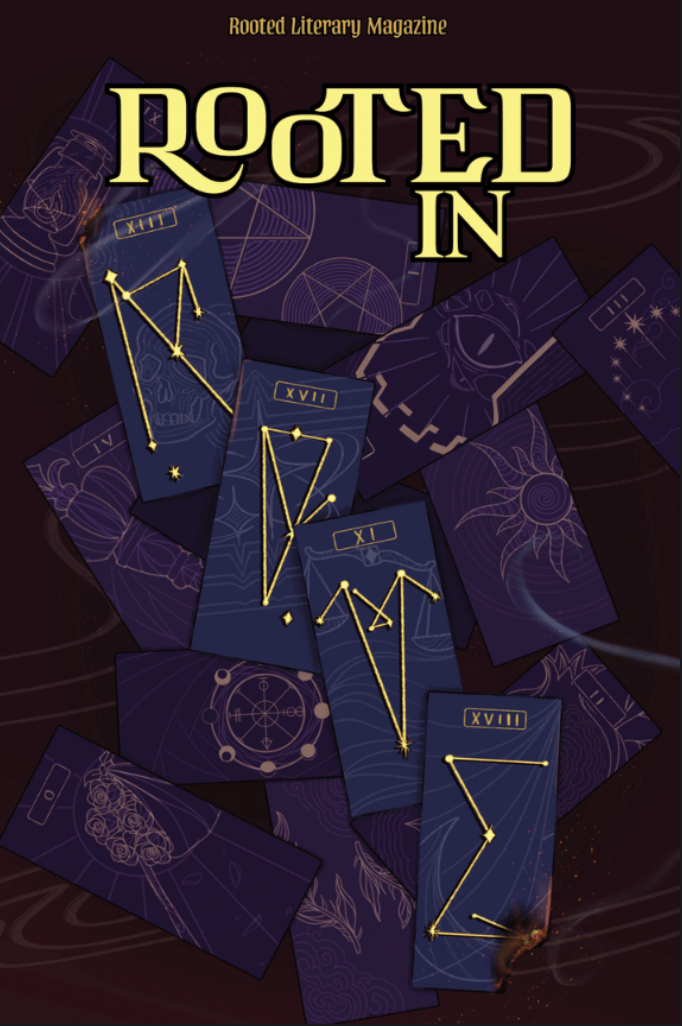
Last fall, I was happy to be a part of the Rooted in Rite Halloween Anthology from Rooted Literary Magazine. You can buy the digital or physical edition of that anthology here, as well as their latest Rooted in Home anthology. Here’s an excerpt from my story, “The Halloween Man”.

He’s haunted me since I was a child, fumbling with a dull kitchen knife against the pumpkin fat. He is the stomachache of sneaky snacks, the guilty thrill of Jolly Ranchers popped quietly at midnight. He’s what you light the jack-o’-lanterns against, the costume you’re too scared to wear, the horror they don’t show, the gore you can’t explain away with latex, corn syrup, and movie magic. If Halloween is a white sheet, then he is the two black holes, sightless and unseen. I’ve felt his presence as far back as I can remember, but I didn’t see his face until I met him, one lonesome October, in the back of a haunted house.

I was almost thirteen and tired of hearing, Aren’t you getting a little too old for this, Will? You can have all the candy you want at home! I knew my trick or treating days were numbered, but each year I wished more and more that Halloween would never end. I was obsessed with horror movies and would rent successive sequels from the video store downtown. My favorites were the slashers, Halloween and Friday the 13th, anything with screaming girls and gleaming knives. Like a lot of kids that year, I was going as Ghostface, while my little brother Nick was going as a cowboy (he’d hide under his blanket for any scary movie that wasn’t Hocus Pocus. We’d already carved our pumpkins and

watched Linus wait all night in his empty patch. I had convinced my mom to show me The Silence of the Lambs, the only horror movie she could stand, and had seen every movie they played on TV that month, carefully recording the ones I didn’t already own on VHS.

One night, during the commercials, I saw an ad for the promised land.

Coming this Halloween weekend to the Marblemount Community Center: A spine-tingling experience not for the faint of heart!

Thrills! Chills! Tricks! Treats!

Dare you enter…The Macabre Manor?
Standard
The Shadow Over Innsmouth

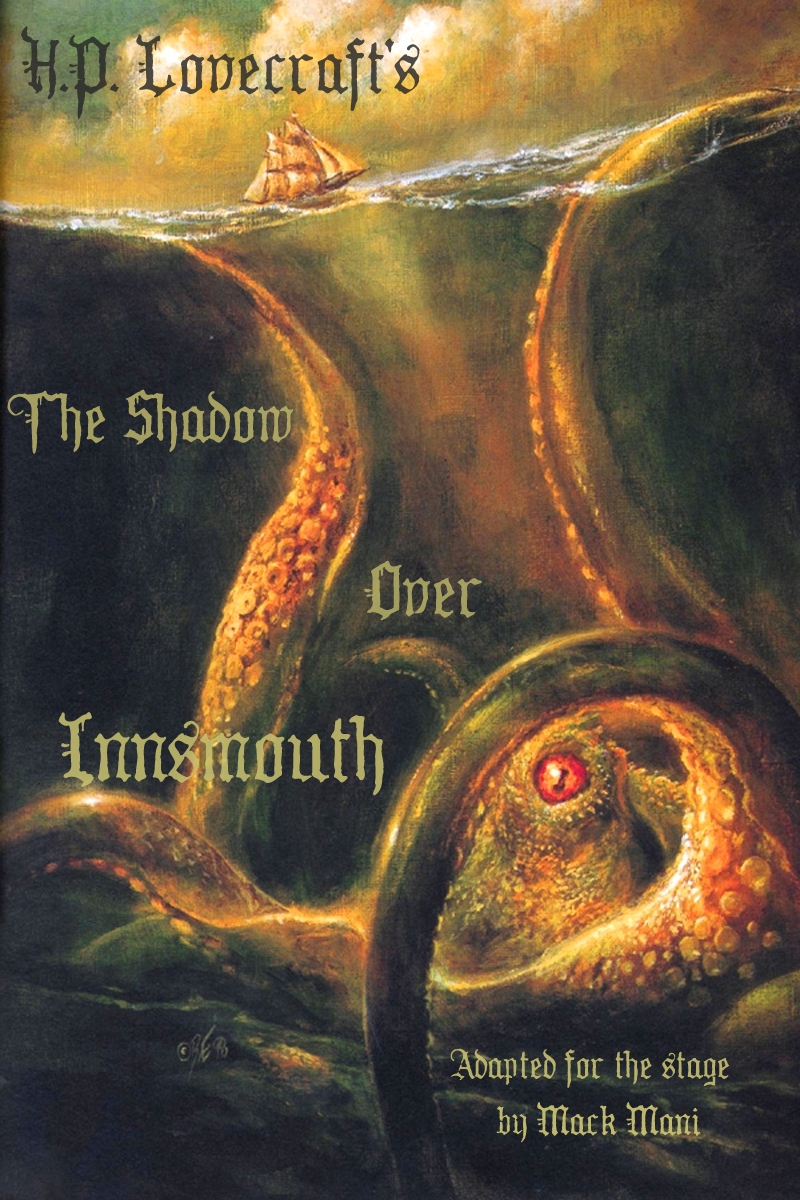
H.P. Lovecraft’s The Shadow Over Innsmouth

Two years ago, I wrote a stage adaptation of H.P. Lovecraft’s The Shadow Over Innsmouth for the H.P. Lovecraft Film Festival. I believe this work, like the original story, should be in the public domain. You are free to read, download, distribute, and perform this piece for commercial and noncommercial purposes.

8 M, 2 W, 10+ extras.

An excerpt:

Scene I

Darkness.

The sound of waves and wind, rising.

Lights up on Area 1, the Ritual Room, where two cultist kneel, in tableau. They wear dark green robes, their faces obscured by hoods. They break and draw a wide chalk circle on the stage floor.

ROBERT OLMSTEAD sits upstage of this, at a rolling desk.

His head bent over a typewriter. OLMSTEAD and the desk are moved downstage, into the light. Wearily, he looks up at the paper in front of him. He types as he speaks, slowly at first, then faster. As he speaks, a photograph of Devil’s Reef is projected on the Cyclorama.

OLMSTEAD:

April 31st 1927, office of the late Anne-Marie Tilton, Miskatonic University, Arkham Massachusetts. (He trembles slightly) My name is Robert Olmstead and I am a fiction. A character in some strange and perverse tale of horror.

I have been maneuvered and positioned and now, I am no longer in control of myself. There is an inhuman element inside of me. Perhaps it was always there waiting, sleeping…

For this cannot be reality. Yet, I am present and I breath and I perceive the world around me as I always have…and yet, if I am to believe in the notion of my own sanity…I must also assume that which would compromise it.

Innsmouth. A squalid town, worm-eaten and decayed.

What I found there, what found me, is very old and very deadly. A dangerous kind of belief that ends in the destruction of all that we hold dear.

Or I am mad.

But that does not mean that I have not seen the truth. If there is any part of this account which should be heeded, let it be this: The town must be destroyed. Down to it’s very foundations, the waterfront and the reef.

He continues to type as lights and projection fade. The sound of the waves take over…

A full copy can be read and downloaded here.

Standard
Poetry

Missing Parts

My sister went missing in the Fall of 1986,
just as the leaves were beginning to turn,
nothing was different the next morning
except that she was gone,
her bed still messy from the night before.

The whole town came out,
searching the nearby fields and woods in a line,
beating the wet brush with sticks,
calling out her name.

She was only seven years old.

They thought it might be our mom,
who’d run off when I was eleven and Lucy just three,
but she never cared enough
to commit a crime just for our sake.

Neighbors brought us cookies
and casseroles using green beans
in every possible combination,
telling us they’d keep our family in their prayers.

I got asked to homecoming
by five or six different girls that year,
each one expressing their sympathy,
relieved when I said no,
that I didn’t feel up to it.

The town even cancelled Halloween,
parents taking kids two towns over
just to go trick or treating,
their own neighborhoods voluntarily stripped
of laughing skeletons and spooky cotton spider webs.

They searched for a few weeks,
but in the end,
all they ever found was
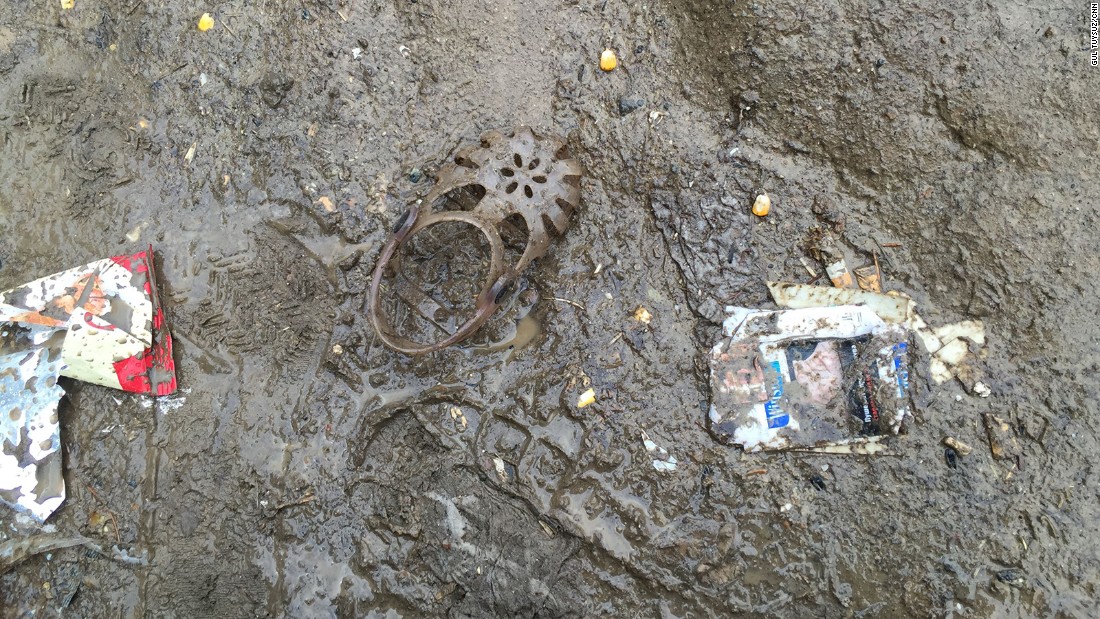
her shoe, the left,
half-buried in mud by the interstate
about a mile from our house.

They say she wandered out that night
getting picked up by the wrong man,
who’d said something to get her into his car
(she knew better than to talk to strangers).

Her face was in the news a lot that winter,
warning parents to be more mindful this holiday season
and again during a push to crackdown on
vagrants and undocumented workers in the state.

One paper argued
that she tried to run away that night,
fleeing some situation at home.
They made certain accusations about my father
and though nothing ever came of them,
the other parents in town would still regard him
with an air of suspicion, their faces asking,
“If you didn’t do it, then
how could you let it happen?”

By next spring,
Dad was talking about it less and less
but her room was still the same,
disturbed only by time, dust,
and the detectives’ mild probing,
b
ut by summer,
he seemed ready to forget.

We went upstate that July
and spent a month hunting at our cabin,
built by his father before my dad was born.

One night by the lake,
he apologized to me,
for everything that had happened
and for all that he had done.

A year later,
we had a funeral and a “celebration of life”
which is a nicer word for a wake;
they served white cake
with little pink roses made of icing,
soft and sickly sweet.

We buried a casket
of her favorite things,
toys and stuffed animals, mostly.
Then everyone began to talk about closure,
and being able to move on.

The whole thing shook my father up pretty bad,
but he didn’t start drinking again
until I went off to college.
He passed away the summer
before my sophomore year,
finally leaving me to my own devices.

I didn’t kill again until I was almost 30,
the memory of my little sister
struggling beneath my weight,
having faded to a secret place of mind,
next to my first cigarette,
stolen from grandfather’s desk,
my first drink of alcohol,
given to me by my mother when I was six,
and my first sexual experience,
a warm sticky fumbling
in the backseat of my dad’s station wagon.

Standard